
Chapter 16: Salon Series: Vertical and Horizontal Threads II
(Continued from Chapter 15)
Literature: Poetry
While exploring various aspects of Japanese culture beyond dance, I was drawn to the literary arts. Not being a literary expert myself, I chose to rely on the insights of experts in the field, writers and scholars. and invited them as guest speakers. Literary forms like essays and novels felt too vast for me to connect with meaningfully through dance—unless they served as the basis for dance dramas. Poetry, however, consistently resonated with me. Its evocative nature and accessibility made it a rich and inspiring source for choreography.
My first attempt was a historical introduction to Japanese poetry, spanning from medieval to modern works—more specifically, from Waka and Haiku to Gendai-shi (Modern Japanese Poetry). Guest lecturers provided context and analysis while I presented classical dances inspired by Waka, such as Shigure Saigyo, a Kabuki dance based on the monk and poet Saigyo.
I even ventured into Western contemporary poetry—not as a formal study, but as a rich source of inspiration for choreography that explored universal themes. It was a joy to choreograph dances inspired by the poems by poets such as Rainer Maria Rilke and Mary Oliver. One special highlight was the opportunity to restage my favorite work, Chieko, based on Chieko-shō, which I had first presented at the Japan House in 1980. I was fortunate to collaborate with singers Mary Myers and Beth Griffith for this performance.
Among the most frequently presented poetry programs in the Salon Series were Renku (Linking verses) and dances, specifically, performances that alternated Haiku stanzas in the traditional Renku format dance. This idea first emerged through a collaboration with the Haiku Society of America and was presented by Japan Society in 2006 (see Memoir, Chapter 11: Poetry and Dance).
While most choreographic works in the Salon Series were improvised within a structured framework, the Renku and Dance performances embraced “pure improvisation,” bringing together Haiku poets, musicians, and myself in spontaneous creation. When audience members asked how I managed to combine these art forms, my answer was simp simple: “The only way it was possible was because the poets and musicians were superb artists.”
Inspired by the success of Renku and Dance, I began offering free workshops at senior centers in Manhattan with the title, Dance and Poetry of Japan Workshop. Over the past ten years, I have held six programs, and the senior participants have consistently been enthusiastic and creative. At the other end of the age spectrum, I also led Children’s Haiku and Dance workshops at elementary and high schools. I was so moved by the children’s Haiku—not only were they beautiful, but they also revealed profound wisdom. These experiences taught me that observing the world with innocent eyes can lead to life’s most meaningful discoveries.
Because the core rule in Renku is to avoid simply replicating the previous verse, I strove to create a progression, for example: — from waterfall to drinking water, to drinking sake, and finally to becoming drunk as in the video linked here. As is customary in my Renku-related programs, we invited Haiku submissions from the audience at the end. I then improvised dances inspired by those Haiku, which delighted both the audience and the participating artists.
Salon Series #32: Renku and Dance: An Afternoon of Improvisation Excerpt
Literature: The Heike Monogatari from Classic Works
Inspired by Hoichi the Earless, a tale retold by Lafcadio Hearn (Koizumi Yakumo), I created a dance titled Sound of Emptiness for the 10th Anniversary Concert of the Salon Series. This work later evolved into a larger-scale production for the 30th Anniversary Concert of Sachiyo Ito and Company in 2011, featuring singers and dancers portraying the ghosts of the Heike court ladies. Although we did not have access to Hanamichi (Runway used in Kabuki Theater), we were fortunate to use the audience aisles for the entrance of singers and ghostly figures, moving from the upper to the lower levels. This use of space made the transition from the other world feel especially effective.
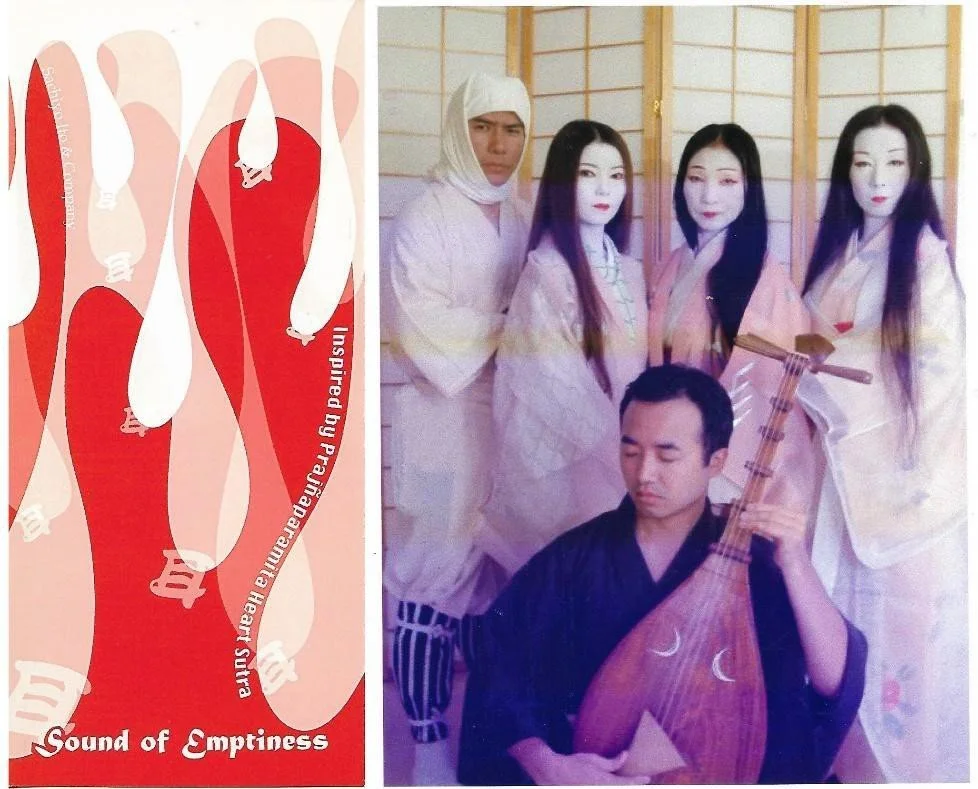
The 10th Anniversary of the Salon Series Postcard
However, my aim was not simply to depict ghosts. I centered the dance drama around the teaching of Prajnaparamita—a profound Buddhist sutra— making the work appropriate for the concert’s theme: “Praying for the Deceased of the Great Tohoku Earthquake.” We concluded the performance with a prayer for peace, joined by all company members, musicians, while Reverend T.K. Nakagaki, who inscribed sutra prayers onto lanterns on stage.
Looking back, the collective efforts of artists—both in Japan and abroad—to raise funds and support earthquake victims became a powerful source of motivation for our performances in the years that followed. Today, with disasters and calamities occurring so frequently, it feels increasingly inadequate to call them merely “natural.” In many ways, they are human-made—deeply connected to the consequences of climate change.
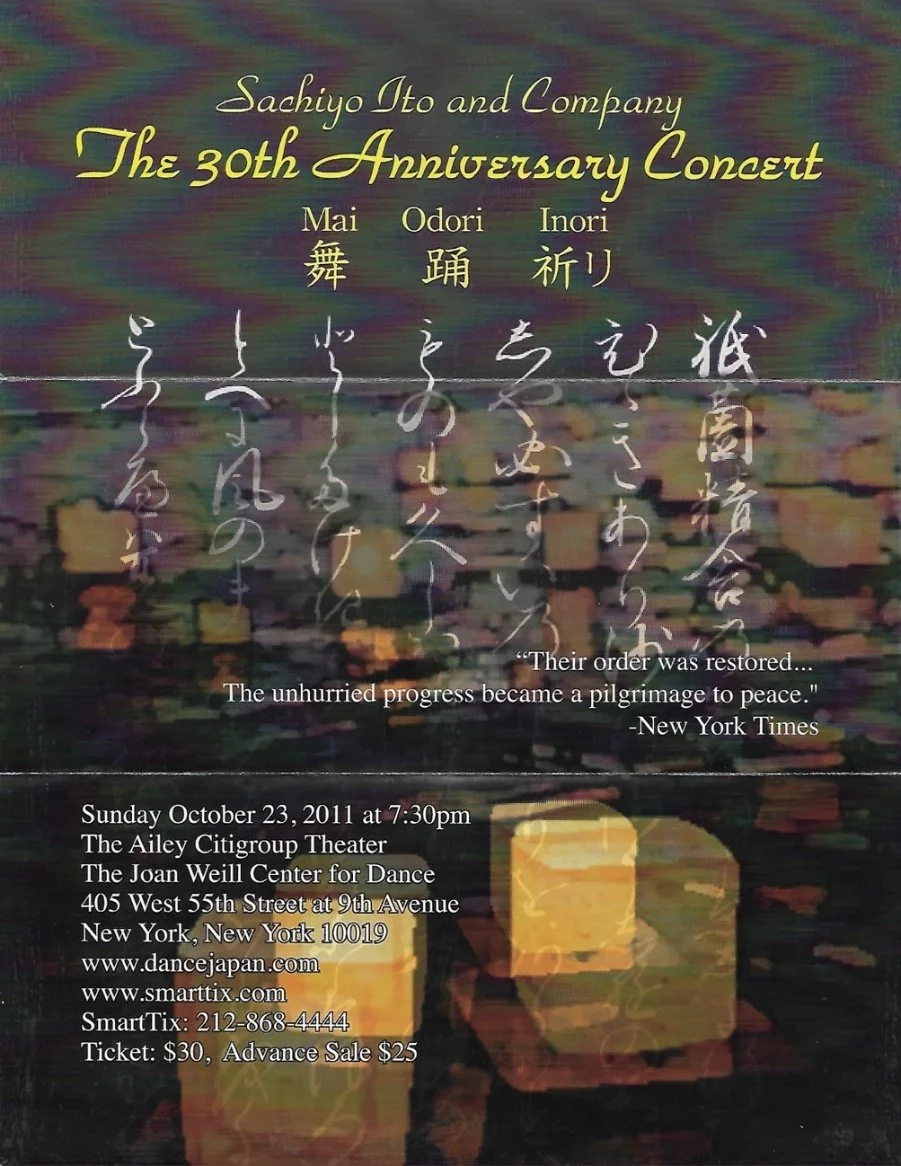
The 30th Anniversary of the Salon Series
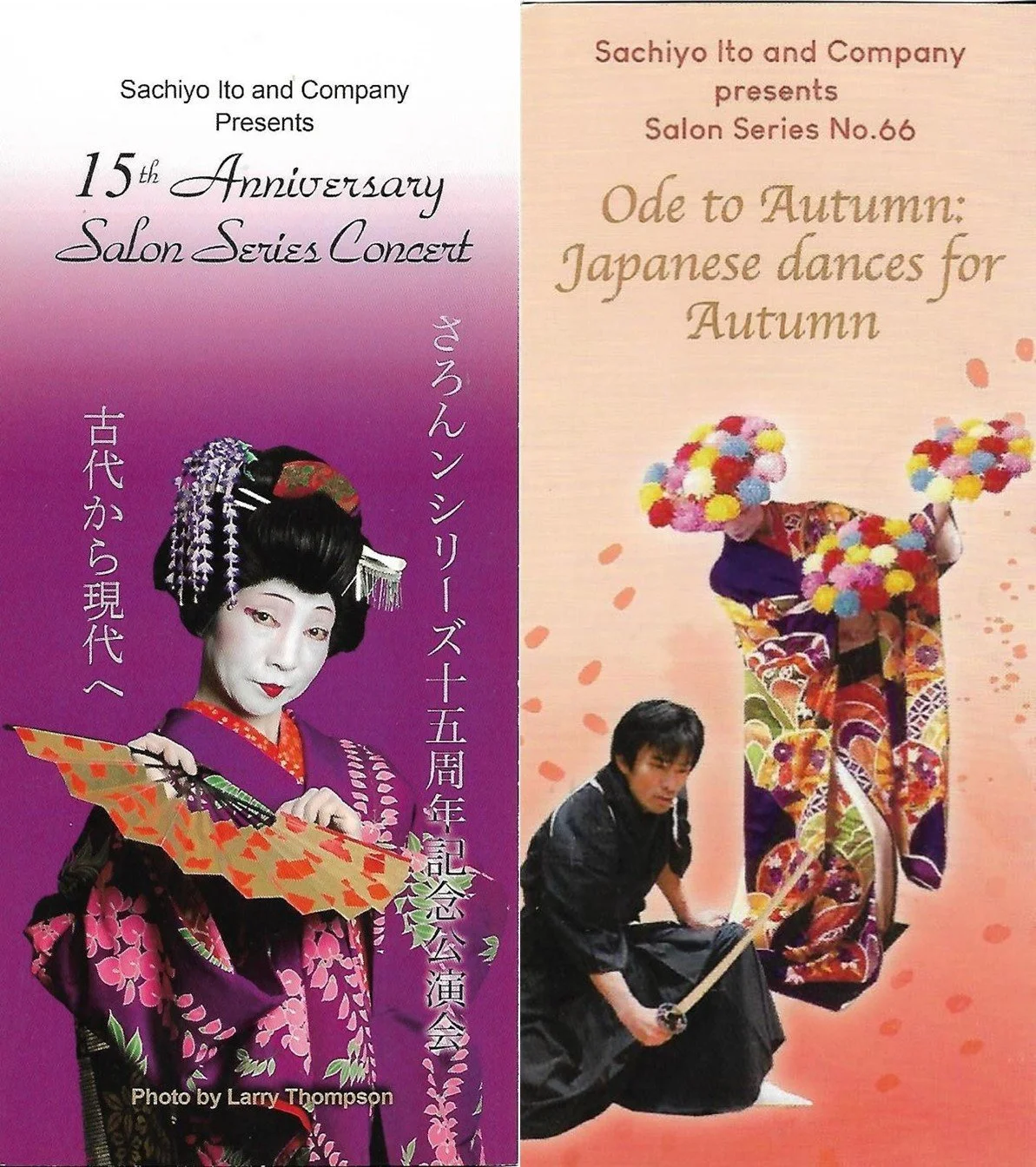
For the 15th Anniversary Concert of the Salon Series, I choreographed Gion Shoja, inspired by the iconic opening lines of The Heike Monogatari (The Tale of the Heike Clan), which epitomize the teaching of Buddhism, impermanence-one of the core aesthetics of Japanese culture.
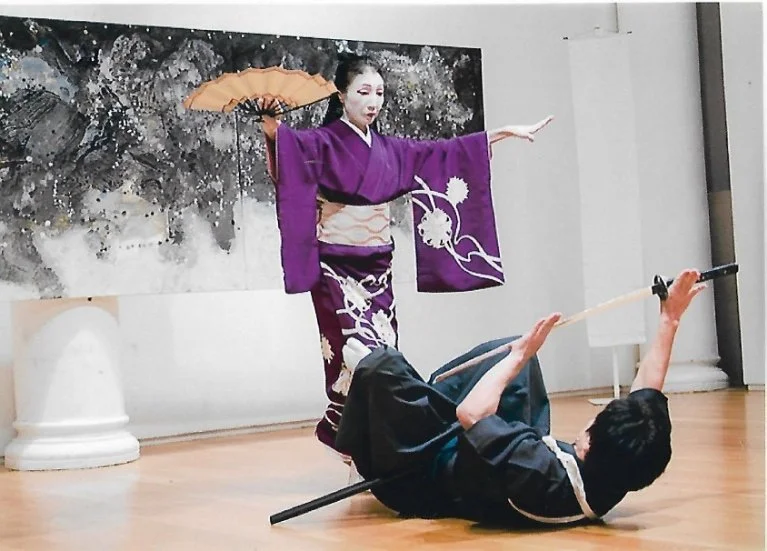
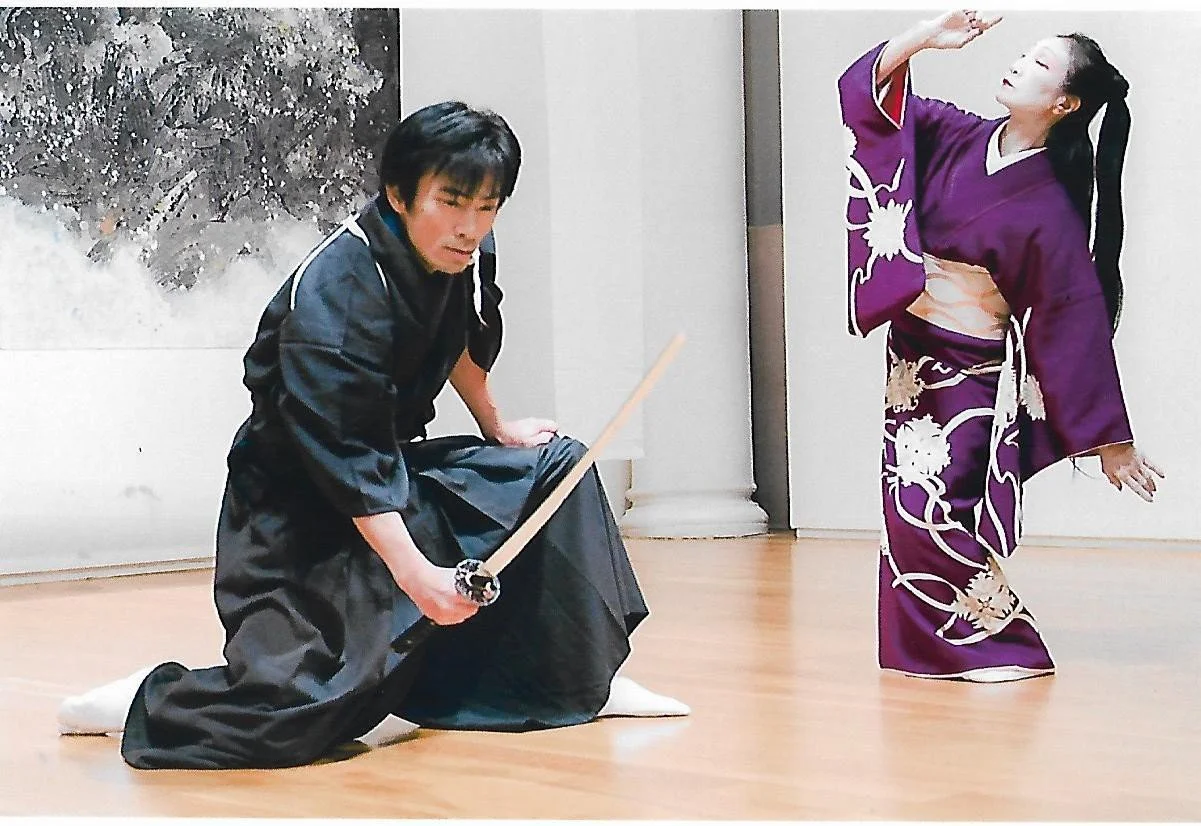
Guest artist Yoshi Amao and I embodied the spirits of warriors from the Genpei War (1180–1185), a fierce conflict between the Taira and Minamoto clans that shook Japan during the late Heian period. Though the war spanned only five years, its impact on literature, music, and dance has been profound and enduring.
Gion Shoja from 15th Year Anniversary of Salon Series
“In the sound of the bell of the Gion Temple echoes the impermanence of all things. The pale hue of the flowers of the teak-tree shows the truth that they who prosper must fall. The proud ones do not last long, but vanish like a spring-night’s dream. And the mighty ones too will perish in the end, like dust before the wind.”
H. Paul Varley (1984). Japanese Culture, University of Hawaii Press Honolulu, p. 75
Despite the gravity of the theme of impermanence, Despite the gravity of the theme of impermanence, choreographing a dance about defeating a samurai was choreographing a dance about defeating a samurai was fun, and the collaboration with Mr. Amao was very satisfying. Since the theme of impermanence for Salon Series No. 66: An Ode to Autumn, seemed especially fitting for the autumn season, I invited him to the program to present the dance once again. I felt the dance would be suitable for autumn, the time when fallen leaves evoke deep reflection on the transience of life.
Ma: The Japanese Cultural Concept
Ma in Space
Since we cannot speak of Japanese performing arts and Japanese culture without mentioning Ma, I presented several programs in the Salon Series inspired by Ma.
What is Ma?
Ma is a Japanese concept that embraces both space and time. It refers to the interval between spaces and the pause between moments. Yet Ma is not an empty void—it is a space imbued with meaning,
Before I encountered Ma as a distinctly Japanese concept through the writings of Edward Hall*, I had only a vague sense of it—more as something personal, something learned through dance training: a felt sense of space in timing. The following reflections I offer are only my perspective as a dancer, for I am not a cultural anthropologist.
My exploration of Ma in the Salon Series began with the idea of approaching it as it exists in both space and time. I asked myself, “Can we create a moment outside our ordinary perception of time and space?”
A serene experience where everything pauses, where time and space seem to freeze, while we exist fully within that stillness.
Creating Sacred Space
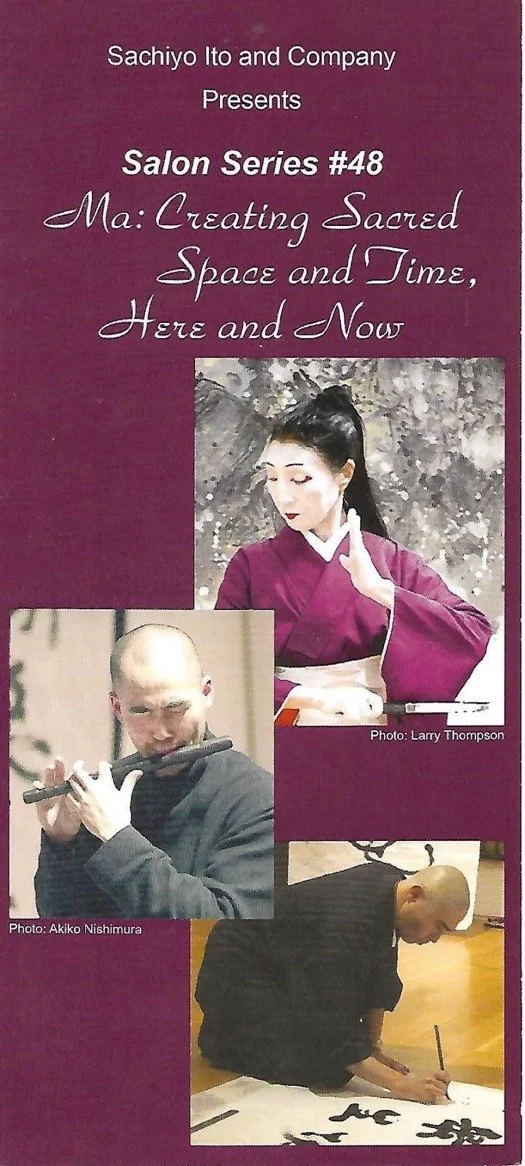
In Salon Series No. 48 Ma: Creating Sacred Space and Time Here and Now, my intention was to evoke a sense of sacredness in the physical space where we gathered, and in the musical space created through the sparseness of the Buddhist chant Shomyo and the sound of Fue (bamboo flute). To deepen this sacred atmosphere further, I incorporated Shakyo, the meditative practice of copying Buddhist sutras into the costumes.
The calligraphy featured the Shiku Seigan (The Four Great Vows, such as the vow to save all sentient beings), which I had sewn onto the kimono sleeves on stage as a visual and spiritual element.
Salon Series #48: Ma: Creating Sacred Space and Time, Here and Now
Color played a symbolic role in the performance: black costumes accented with red, gradually giving way to layers of white revealed later on. In the opening scene, my dancers and I wore the black costume of Kurogo (Stage assistants in Kabuki theatre), hoping it would create a striking and effective visual impact.
One unexpected challenge arose: The calligraphy ink was too wet to attach directly as sleeves to the costumes. It reminded me that “having an idea in the head doesn’t always work in practice!” Fortunately, my stage assistants clad in white, Mariko Suzuki and Monika Hadioetomo, who were both costume designers. saved the moment by carefully drying the ink with paper towels on stage. They executed the task with grace and in a meditative manner. When the ink was dry and ready, they sewed both sleeves to the white kimono while I was wearing it on stage.
To conclude, we invited the audience to join in a walking meditation as a shared closure to the experience.
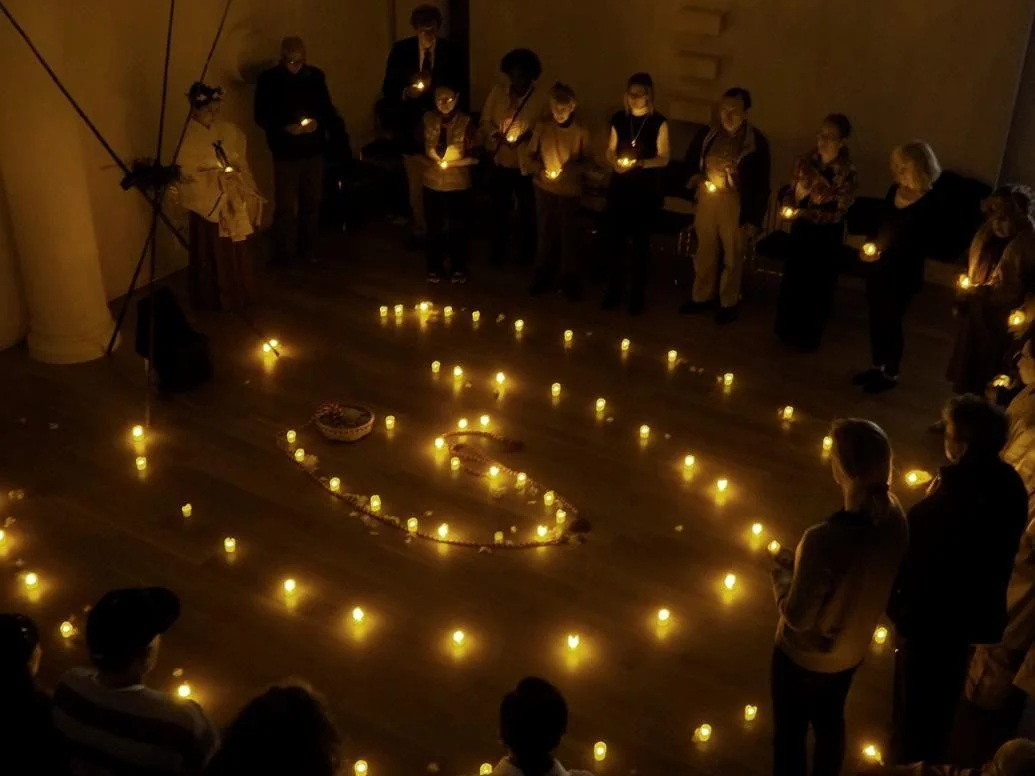
Ma: Sacred Space II was presented as nature worship in Salon Series No.55: Creating Sacred Space II Japanese Nature Worship and Labyrinth Walk. This time I incorporated Shinto ceremonial elements of reverence for nature, such as water purification ritual into the performance space. We were able to transform the venue, Tenri Gallery, into a sacred space without relying on theatrical effects, despite its intimate size, which is typically too small for a labyrinth.
To conclude, we invited the audience to join in a walking meditation as a shared closure to the experience.
Ma: Sacred Space II was presented as nature worship in Salon Series No.55: Creating Sacred Space II Japanese Nature Worship and Labyrinth Walk. This time I incorporated Shinto ceremonial elements of reverence for nature, such as water purification ritual into the performance space. We were able to transform the venue, Tenri Gallery, into a sacred space without relying on theatrical effects, despite its intimate size, which is typically too small for a labyrinth.
Salon Series #55: Creating Sacred Space II: Japanese Nature Worship and Labyrinth Walk
For the music and singing, I selected Etenraku Imayo from Gagaku, Japanese court music. The goddess and her attendants descended from the gallery’s upper balcony as they sang, signifying their divine arrival from heaven. Bells echoed through the space to ward off evil spirits during our dances, performed by the goddess, her attendants, and myself.
To evoke a feeling of labyrinth, I shaped a winding path with rope, linking the performance area to the corridor and entrance. Each audience member held a candle as they joined in the walking meditation. At the closing, we gathered in a perfect circle--an expression of unity for peace.
Ma in Time and Iki
Ma in timing is one of the most vital elements in the performing arts, whether in dance, music, or drama. Its significance also extends to our social interactions, shaping conversation, emotional expression, and energetic presence.
In dance, Ma, the space or pause between movements, can be shaped by musical rhythm or guided by breath. In Japanese, however, the concept of breath is expressed in two distinct ways, though both are translated into English simply as “breath.” The first is Kokyu, which refers to the physical act of inhaling and exhaling. The second is Iki, which encompasses not only the physical function of breathing, but also intention and the internal energy known as Ki or Chi.
A powerful example of Iki is found in the traditional orchestras of Kabuki and Bunraku. These ensembles perform without a conductor, yet the musicians begin, pause, and resume in perfect unity through shared breath. It’s an intuitive synchronicity, cultivated through practice and passed down through generations.
Kabuki critic Tamotsu Kaoru once stated, “Iki is the foundation of acting.”
My personal journey with breath began in the 1980s when I first encountered yoga. At the time, I struggled with deep inhalations and exhalations as practiced in yoga. I later realized this difficulty may have stemmed from my dance training, which emphasizes concealing breath, even during high-impact movements. Dancers and actors must appear effortless on stage; therefore, shallow, controlled breath becomes essential. In this context, breath transforms into Ikan intentional, internal force.
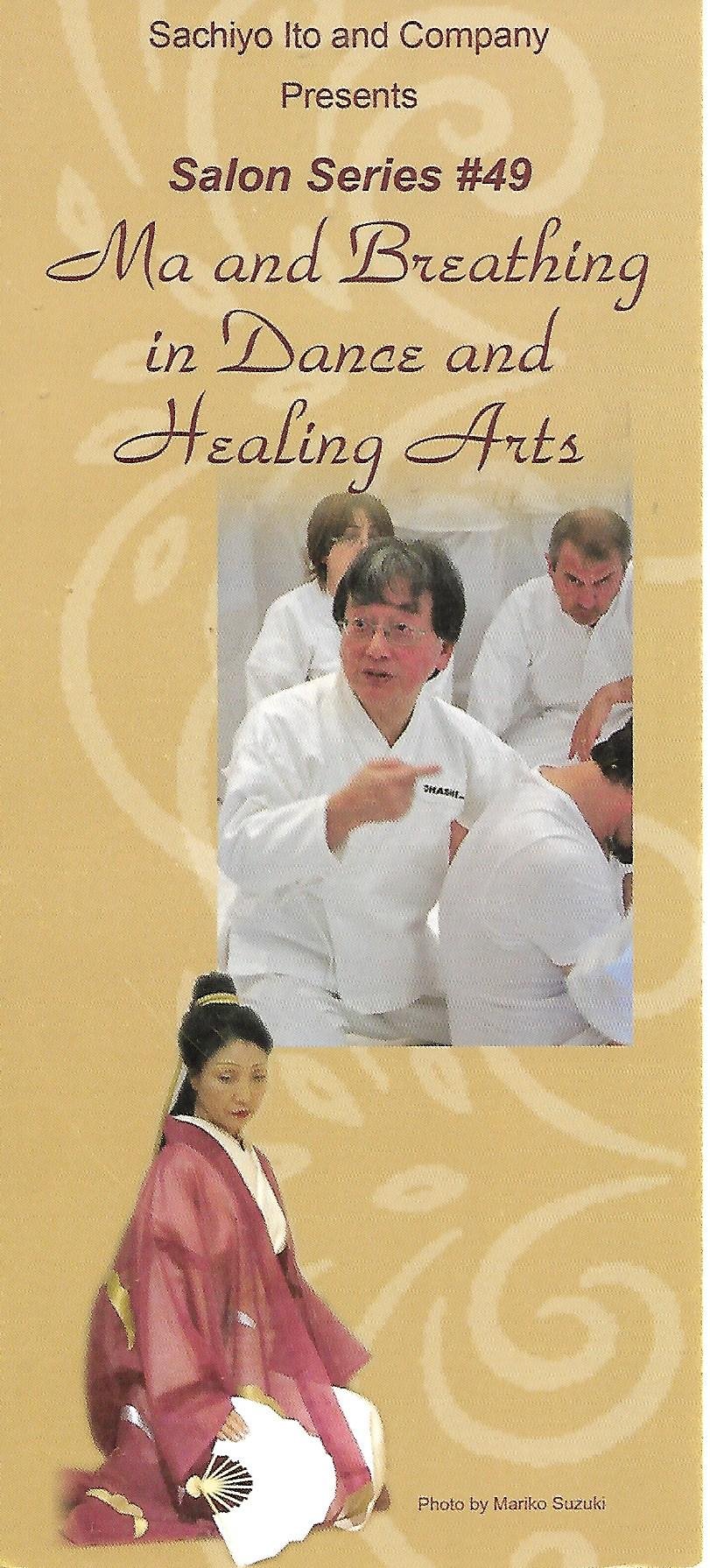
Curiosity led me to explore the role of breath in healing arts, which in turn inspired the creation of Salon Series No. 49: Ma in Healing Arts and Dance. My guest was Wataru Ohashi, Founder of Ohashiatsu (the Ohashi Method). His charismatic presence encouraged many audience members to participate. Pairing strangers seated side by side to practice shiatsu techniques sparked laughter and connection, while exploring Iki proved to be engaging.
I demonstrated how Iki is used to convey emotion in Okinawan women’s dance. In portraying sadness, subtle breath supports the graceful flow of movement, but it must remain hidden from view, felt rather than seen.
Iki (breath with intention) and Kokyu (breath as physical function) form an expansive topic across the performing arts. For the Salon Series, I could only touch on the related practices in two programs that featured Karate, and Okinawan men’s dance, the dance form influenced by Karate, in Salon Series No.12 and Salon Series No. 29. These presentations revealed how critical it is to grasp Hara.
Salon Series #49: Ma and Breathing in Dance and Healing
In all the traditional martial arts and traditional music, including Utai singing, breath originates from the abdomen, known as Hara. It is the body’s energetic center, grounding one's stance and channeling power through movement. Hara is the anchor, and mastering it is essential in dance, Okinawan dance, Japanese dance, martial arts, and in healing arts such as Mr. Ohashi’s.
Though unrelated to the topic, I would like to express heartfelt gratitude for the kindness and long friendship of Mr. and Mrs. Ohashi, who generously hosted a celebration at their Manhattan home in 1988 when I received my Ph.D.
Ma in Dance
So now, how can we successfully learn Ma in dance?
As Ichikawa Danjuro VII, the renowned Kabuki actor, once said, “There is Ma you can be taught, and Ma you cannot be taught”.
Ma cannot be taught. Then you might say, “That’s not fair!”
Paradoxical though it may sound, finding the right Ma is the journey that every dancer and artist must pursue.
Another legendary Kabuki actor, Onoe Kikugoro VI, offered a striking metaphor: “Ma is 悪魔の魔 (Ma of the devil), 魔術の魔 (Ma of magic).” In other words, when Ma is misused, it can ruin a dance, or acting, while on the other hand, when executed well, it can mesmerize audiences.
While the use of Ma is elusive, its potential is immense.
The answer to the “How” lies in the refinement of one’s craft. For mastering of Ma is not a matter of simply learning steps or movements—it is the art of timing, awareness, and emotional depth. It is the space between the beats, the breath in the body, and the connection with the audience. Through practice and deepening understanding, a dancer learns to make Ma not just a pause, but a powerful, intentional moment that enhances the entire performance.
Now, if you are not a dancer, please feel free to skip the next section, for it summarizes my dance instruction.
We first go by the prescribed timing of music, the rhythm, which is clearly punctuated by the music. A difficulty may be that there is more than simply following the rhythm in mastering a dance piece. It is characteristic of Japanese music to place importance on melody more than rhythm. Furthermore, classical choreography often requires movements with the words, such as at beginning or the end of a word or phrase. The latter poses an additional difficulty for non-Japanese-speaking students, one they can, however, overcome through their efforts and practice.
Then, we brush up our Ma through breath, more precisely with Iki, the breath control: long and short breath, deep and shallow breath in executing movements and gestures. They are first controlled by intention: how you want to express the emotions or the meaning of the lyrics, the character in dance. Then, find a good Ma in between the clear musical stamps: Try going against the music rather than going together with the tempo of the music, or simply pause. Yes, the pause. Ma is the essence. It is not a static pause in dance. In Noh, dance and acting are movements in stillness. Energy flows through after the punctuation of words and the rhythmical cues.
Does it sound hard? Not really, for experimenting is a fun process. There, you are given freedom for your own creativity, despite often hearing the criticism that there is “no freedom in traditional dance”. I would like to remind those who consider traditional art as rigid: Japanese culture is a culture of pattern, going into pattern and out of it. Once you master discipline, there is freedom. So have fun!
The above is my general instruction in lessons, but over the years I began to think of another word that could be used, or should I say another linguistic approach to reflect what I really mean. It is “resonance”, for I believe dance can have an effect of resonance as in music.
Ma can evoke resonance: enabling audiences to create their space universe as they hear the echo in their mind, in their inner universe, much like the way an echo continues to reverberate in the mind after hearing music.
With this perspective, and as part of my ongoing exploration of Ma — the space between — I presented Salon Series No. 54: Resonance in Music, Dance, and Literature.
One of the guest speakers was the Shakuhachi player James Nyoraku Schlefer, to whose music I danced. He demonstrated the importance of sound—to be absorbed in the sound, which gives us meditative quality—more than in the melody or the rhythm. Also, realizing the importance of pause/silence in haiku, I invited John Stevenson, the Haiku laureate. (Refer to Chapter 11 of this memoir for his insightful comments.)
My aim in the program was to show how important it is to have resonance, the echo in music, as well as resonance in the movements of dance, and to consider this concept: Dance does not and should not end at the punctuation of or stomp of sound in music. My further quest was, “Can I send an effective message in dance through the pause, by doing nothing, just as Zeami the Noh dramatist said, ‘Doing nothing is captivating”.
Now I would like to reference Japanese Ear by the composer and author Roh Ogura. In his book, Ogura observes that the Japanese ear holds a deep appreciation for the silence that follows a musical performance and for the resonant echo of a temple gong.
To illuminate what he says, here is what I shared in the Salon program, which I would like you to try.
“Please close your eyes.
Keep breathing easy, in and out, feel space around you, and you are the space itself, and you are expanding.
Here is the Gong (striking gong).
Keep soft breathing… (10 seconds)
Open your eyes
Smile!”
Did you hear the echo — and even the silence after the sound fades? That silence is Ma: the space between distinct sounds. Ma is not a void, but something alive and essential. It breathes meaning into what surrounds it.
My Shimai (Noh dance) teacher often used a striking metaphor to explain the stillness—the non-movement—in Noh: it’s like pressing both the brake and accelerator pedals at the same time while driving. In that moment, the body holds both forward and backward tension. When the control is finally released, energy bursts outward.
But please, don’t try that in an actual car. We’re talking about dance!
Resonance after motion. Silence after sound. What message can we send into the space, the “Ma,” that follows?
In conversation, silence between words can be powerful: “Will you marry me?” “……”
In literature, The Pillow Book exemplifies simplicity and resonance: “Spring, dawn.”
The two words, that resonate afterward offer us infinite meaning that we can enjoy.
A Haiku by Basho echoes similarly.
An ancient pond—
A frog jumps in
The sound of water
The splash fades, then comes the deeper stillness, inviting us into timelessness.
Things are unsaid but resonate after sound and movements are performed, or words are spoken, offering limitless opportunities for audience/reader/viewer to participate in the completion of the art with their imagination. What freedom we have!
The unimaginable wonder of Ma: resonance after a word, movement or sound offers the audience boundless freedom and to co-create the meaning of art with the artist.
Ma has been one of my lifelong quests, and yet I am not certain if I could see any of it. But I hope this chapter offers you a window to look into this fascinating subject in the arts, and in our lives.
Cultural Introduction Beyond Dance: Flower and Tea
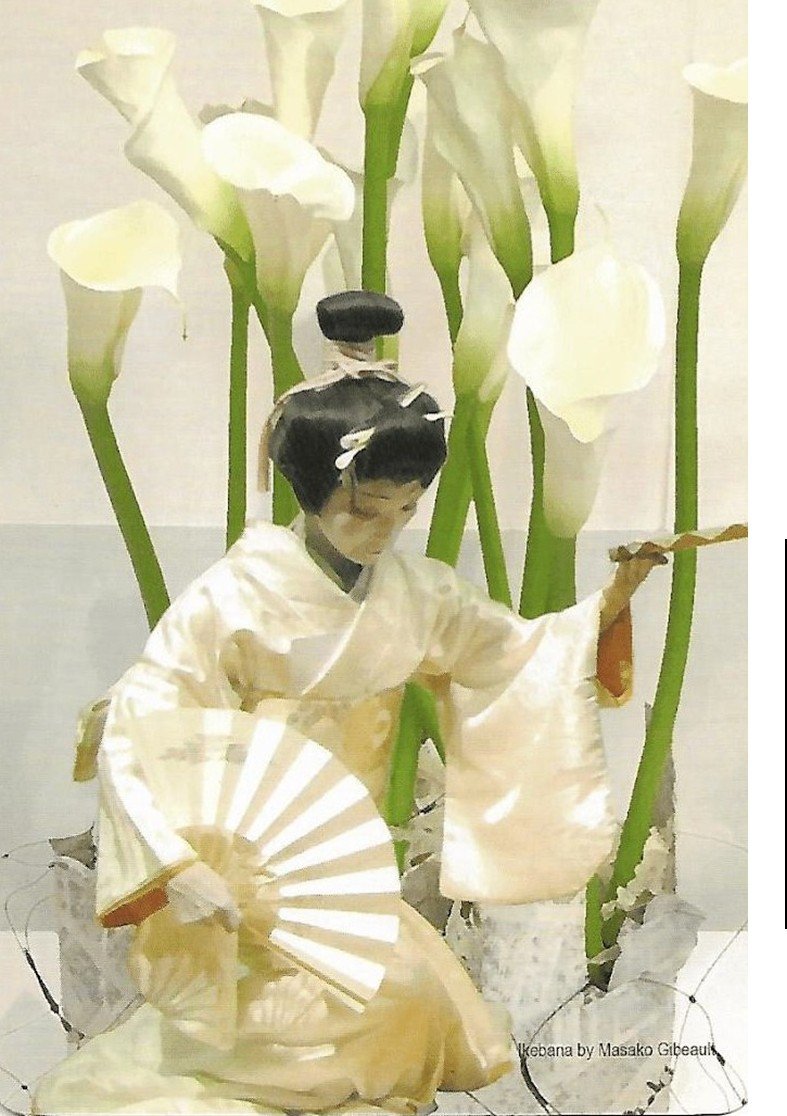
A decade into the Salon Series, still exploring the crucial yet elusive concept of Ma, I began to broaden my quest to arts and culture beyond the performing arts. This shift led to the introduction of other cultural traditions, even if they were not directly tied to dance but were deeply rooted in Japanese traditions including traditional flower arrangement and tea ceremony.
In Salon Series No. 56: Ikebana (Traditional flower arrangement), my company dancers and I presented flower themed classical dances: Shikunshi (The Four Noble Flowers), Aki no Iro-kusa (Flowers in the Autumn), and Shiki no Hana (Flowers in Four Seasons. In Salon Series No. 57: Chanoyu/Sado (the Japanese tea ceremony), I danced Cha Ondo (Tea Ceremony Song), accompanied by live music by Masayo Ishigure and Mutsumi Takamizu to complement the demonstration and deepen the audience’s cultural experience.
The Ikebana demonstration sparked the idea of creating a new dance centered on a flower theme, leading to the collaboration with Katsuya Nishimori, a contemporary florist in Salon Series No. 57: Flower Petals Fall, But Not the Flower.
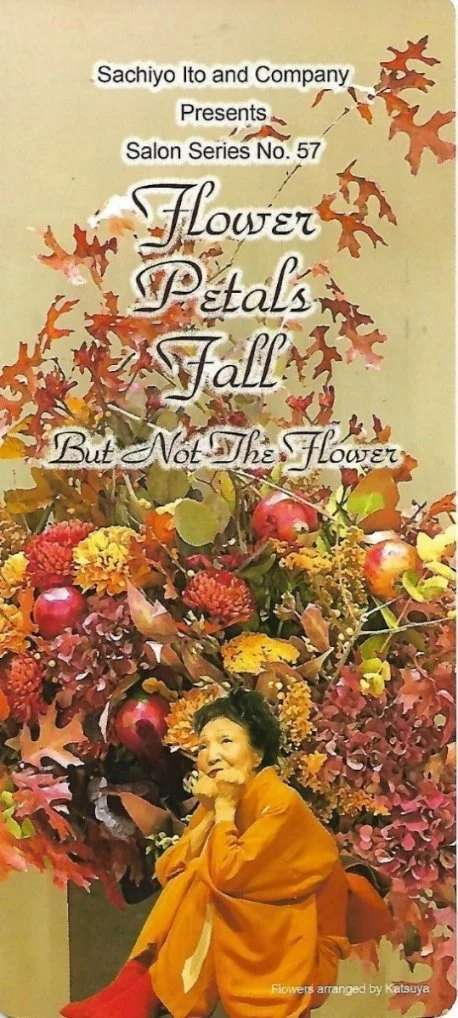
Salon Series #57: Flower Petals Fall, But Not the Flower
The title was inspired by the teaching of Kaneko Daiei, as mentioned in Chapter 4 of this memoir, which details my belief in dance, “flower theory.”
The dance unfolded as sequences in the dream of a playful, vain woman, proud of her beauty.
In her dream there appears a lavish flower arrangement, built by the florist in real time on stage in Kurogo costume.
Destruction: consumed with jealousy toward the flowers for their beauty, she destroys the blossoms in a fit of rage.
Regret and Awakening: overcome with remorse and sorrow for her deed, she glimpses a light of redemption.
Acceptance: Acknowledging the fragility of emotions like flowers, she prays for the “real flower” that transcends fleetingness.
In the closing scene, the woman walks across the stage draping a white met over the fallen petals on the floor, covering them as if she were consoling these fallen lives into a peaceful sleep. At the end, the scattered petals were meant to symbolize the transient nature of life.
Beyond Barriers
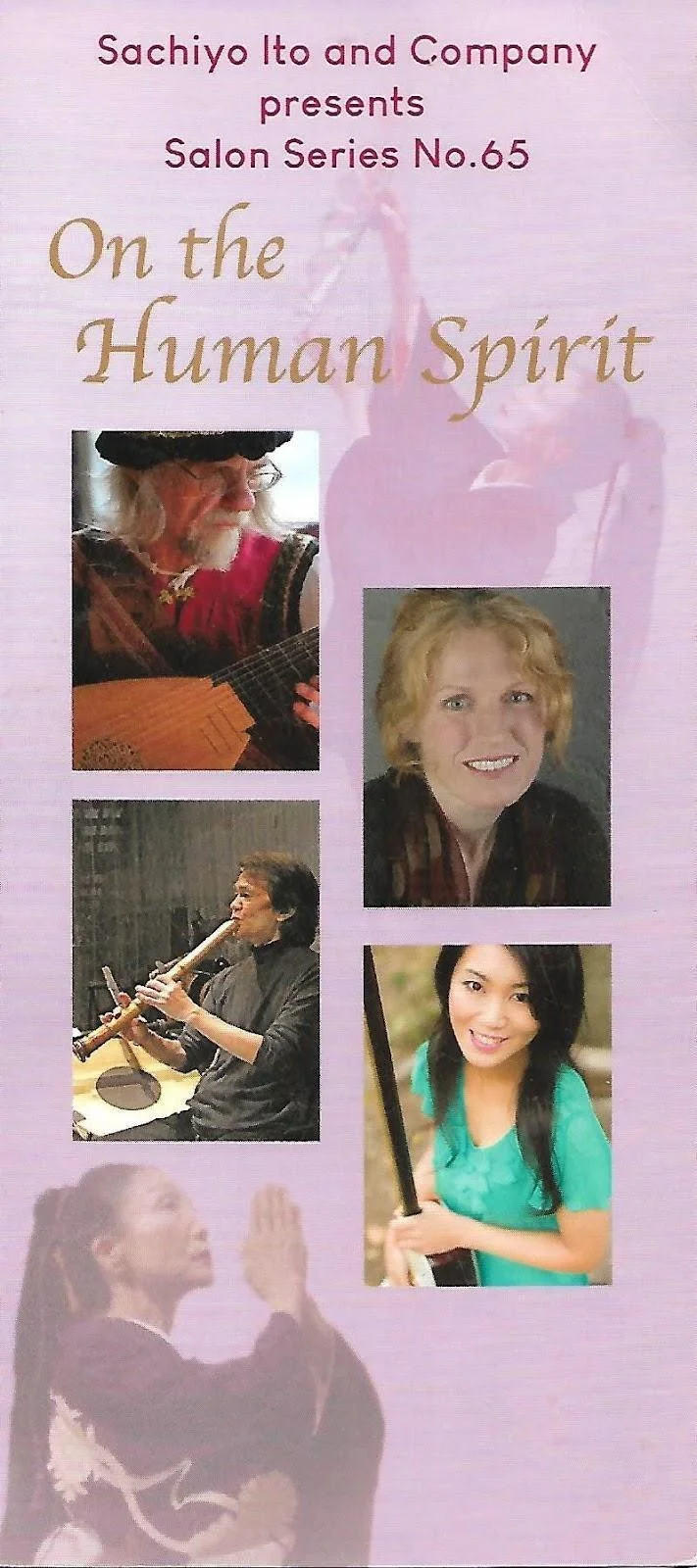
The initial focus of the Salon Series was to foster “understanding beyond boundaries of culture and ethnicity through the introduction and exploration of Japanese arts and culture.” Over time, however, this evolved into a profound message: “We are all human beings. Regardless of cultural, racial, or physical differences, let us overcome these boundaries and work together.”
One of the programs that embodied this vision was Salon Series No. 65: On the Human Spirit. It was a multidisciplinary collaboration featuring poetry, dance, music, and sign language.
Inspired by Ishigaki Rin’s poem Taiyo no Fumoto de (At the Foot of the Sun), the program began by portraying the world we live in as a beautiful place, blessed by the sun. The performance began by celebrating the beauty of our world, blessed by sunlight. Through poetry and singing, we expressed wonder and gratitude.
The dance segment that followed represented tragedies of our human history: war and natural disasters such as earthquakes.
Salon Series #65: On the Human Spirit
In one symbolic gesture, I shredded pieces of the inner sleeves of my kimono to express the torn state of the human spirit. Then, I began tying them together, signifying the act of healing, of picking up the broken emotional and physical pieces of ourselves. The reuniting of the fragments was a metaphor for healing and reclaiming emotional and physical wholeness.
Audience participation was a vital part of this process. I invited them to join me in tying the fragments together into one long string as they sat next to each other in their chairs. This act symbolized unity and the possibility of recovery from both natural disasters and personal tragedies through mutual and collective support.
To close the program, Amelia Hensley from Deaf West’s Spring Awakening taught sign language to us dancers, poetry reciters as well as audience members. We were so delighted to see the audience engage and try the sign language gestures. To conclude, Beth Griffith sang “Amazing Grace,” offering a light to guide us toward healing.
Dance and Prayer
During the crisis of COVID-19, I felt a strong need to offer a message of prayer and healing. In response, we live-streamed Salon Series No. 67: Prayer for Healing and Peace through the symbolism of cranes to welcome the New Year with hope. Drawing on Japanese traditions, the crane, symbolizing health, longevity, and peace, became our central motif.
The program featured classical dances themed around the crane, an origami paper-crane folding session, and my original work honoring the lives of those we had lost. It was a gentle offering of peace, renewal, and collective memory.
Also featured in the program was my new work titled, Memories, dedicated to all the victims of the Pandemic.
The Meaning of Dance
What is most important in dance? For me, it is not technical virtuosity or performance for the sake of display. Dance, at its core, is an offering and a prayer. This intention was at the heart of Salon Series No. 67. For me, it is not technical virtuosity or performance for the sake of display. This intention was at the heart of Salon Series No. 67. I was pleased that our dances conveyed this message clearly. It affirmed the deeper meaning of dance: to connect, to heal, and to transcend.
Salon Series #67: Prayer for Healing and Peace through the Symbolism of Cranes
The dance in the link below is an excerpt from Seiten no Tsuru (Cranes in the Blue Sky). Though it is not from Salon Series No. 67, but from No. 63, it will give you an idea of the classical dance.
Seiten no Tsuru in Salon Series #63: Expressions in Traditional and Contemporary Dance
Closure of the Salon Series
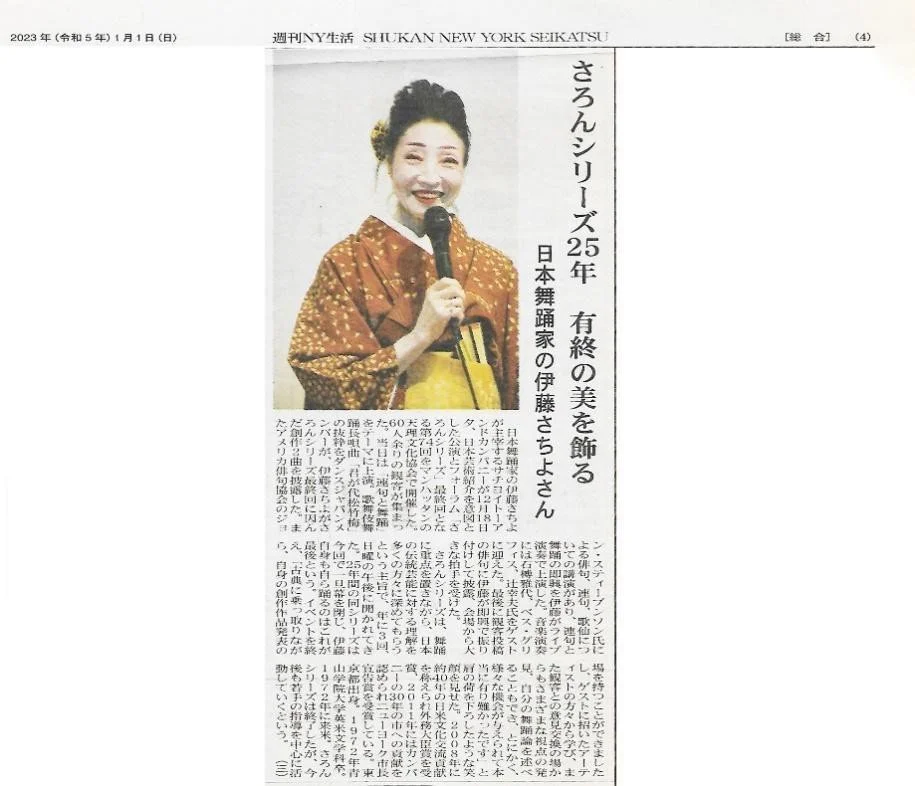
As the saying goes, “Where there is a beginning, there is an ending.” The finale Salon Series, No. 74, took place in December 2023. A photo of me appeared in the Shukan NY Seikatsu, capturing a moment of raw emotional intensity from the dance—perhaps even a touch of theatrical distress. It still brings a smile to my face. The image was taken after I improvised a dance to the verse about an earthquake submitted by an audience member. In that moment, I moved with fear, possibly even rolled across the floor, embodying the tremors and chaos of the scene.
I was very fortunate to have longtime friends and collaborators, John Stevenson, Yukio Tsuji, Beth Griffith, and Masayo Ishigure join me in the finale of the Salon Series, which spanned a quarter of a century.
Thanks to the unwavering support of audiences and guest artists, I was privileged to embark on an extraordinary 25-year journey. The Salon Series became more than just a platform to share my knowledge and thoughts as a dancer and educator—it evolved into a wellspring of profound learning. Each presentation opened doors to vast and varied subjects, so expansive that they seemed to transcend the bounds of a single lifetime—let alone my own.
This journey reaffirmed me a humbling truth: The more years I spend pursuing my path and craft, the more I realize how little I truly know.
Above all, the artists and audiences have gifted me with deeper insight into our shared human nature. No words can fully express my gratitude.
With deep bow.
For Salon Series Videos,
Visit: www.dancejapan.com/salon-series/
The Salon #65 performance ended ecstatically with vocalist Beth Griffith singing Jacques Brel’s If We Only Have Love. With the full cast onstage, Ito’s parting words to the audience were to observe nature and engage the love that connects everything on earth.
— Dalienne Majors
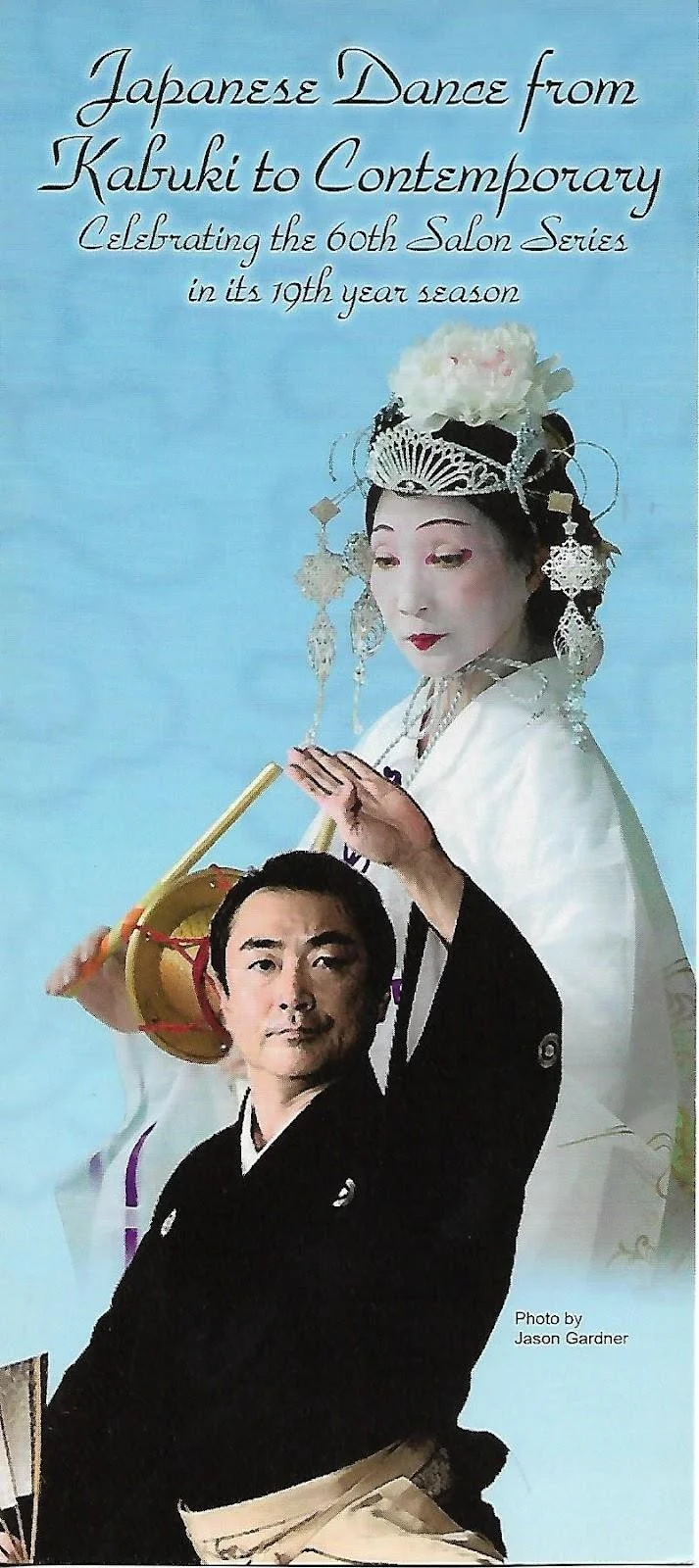
60th Salon Series Welcomes Shogo Fujima:
Ito performed “Petals Fall But Not the Flowers” and “Only Breath” with Indian and European dancers, closing the event in a spectacular atmosphere.
— Kaoru Komimi Shukan NY Seikatsu, June 24, 2017
End of Chapter 16
©Sachiyo Ito All Rights Reserved